Tracking Perimenopause
A diary study of perimenopause symptom tracking
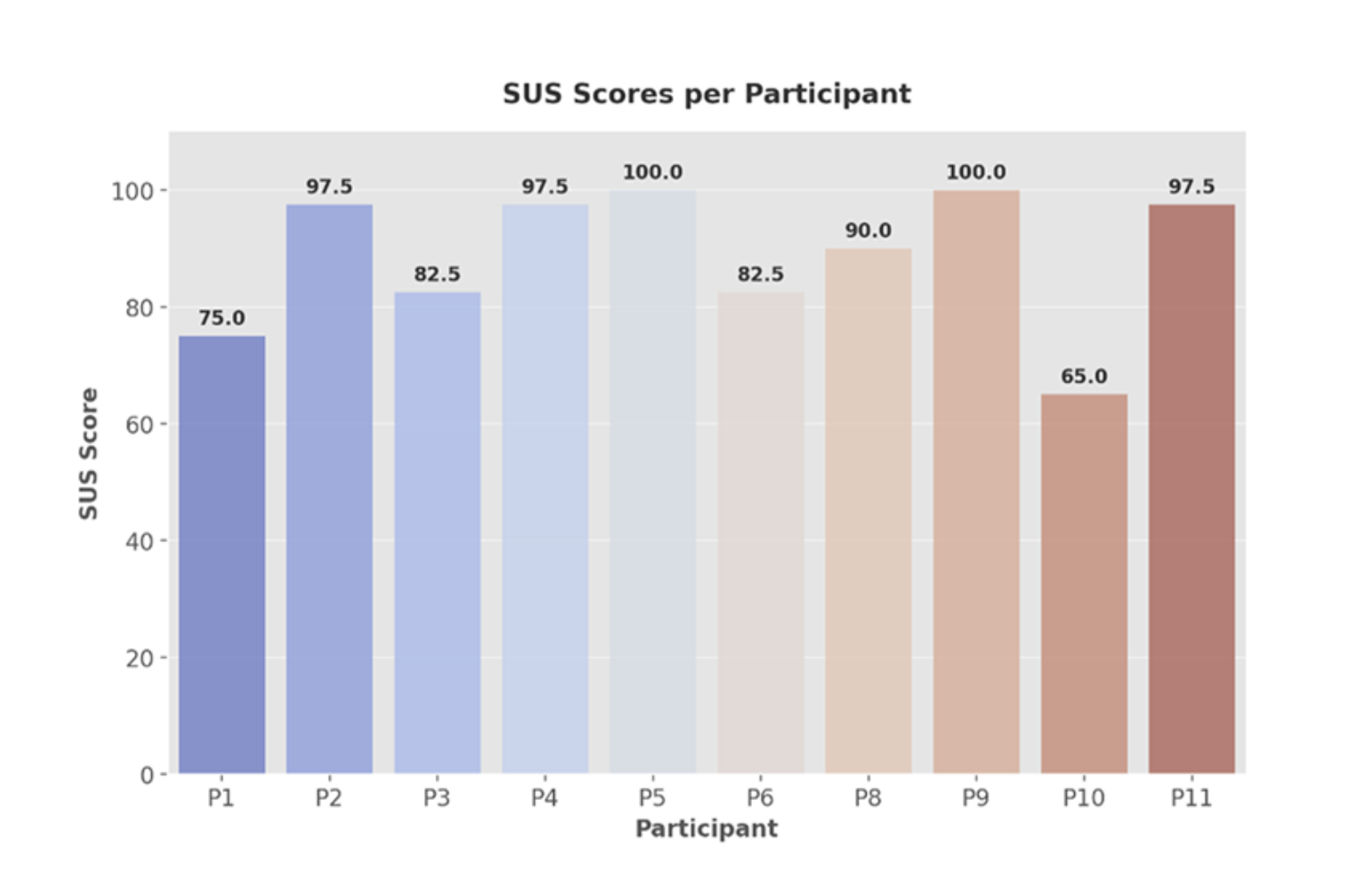
Clue's perimenopause mode scored 88.3 on the System Usability Scale, far above the industry benchmark. My research question was what that number was hiding. I designed and ran a two-week mixed-methods diary study with 40 women to measure what usability metrics miss: whether tracking actually changes how people understand, manage, and advocate for their health.
Chose diary study over usability test, the question was about lived experience, not task completion

Goal: Understand how people actually use Clue's perimenopause mode and surface design opportunities to improve engagement, usability, and clinical value.
Research questions
- How does symptom tracking influence self-management of perimenopause?
- What benefits and limitations do users perceive in Clue's perimenopause mode?
- How does tracking affect health decisions and clinical encounters?
- What challenges or barriers deter continued use?
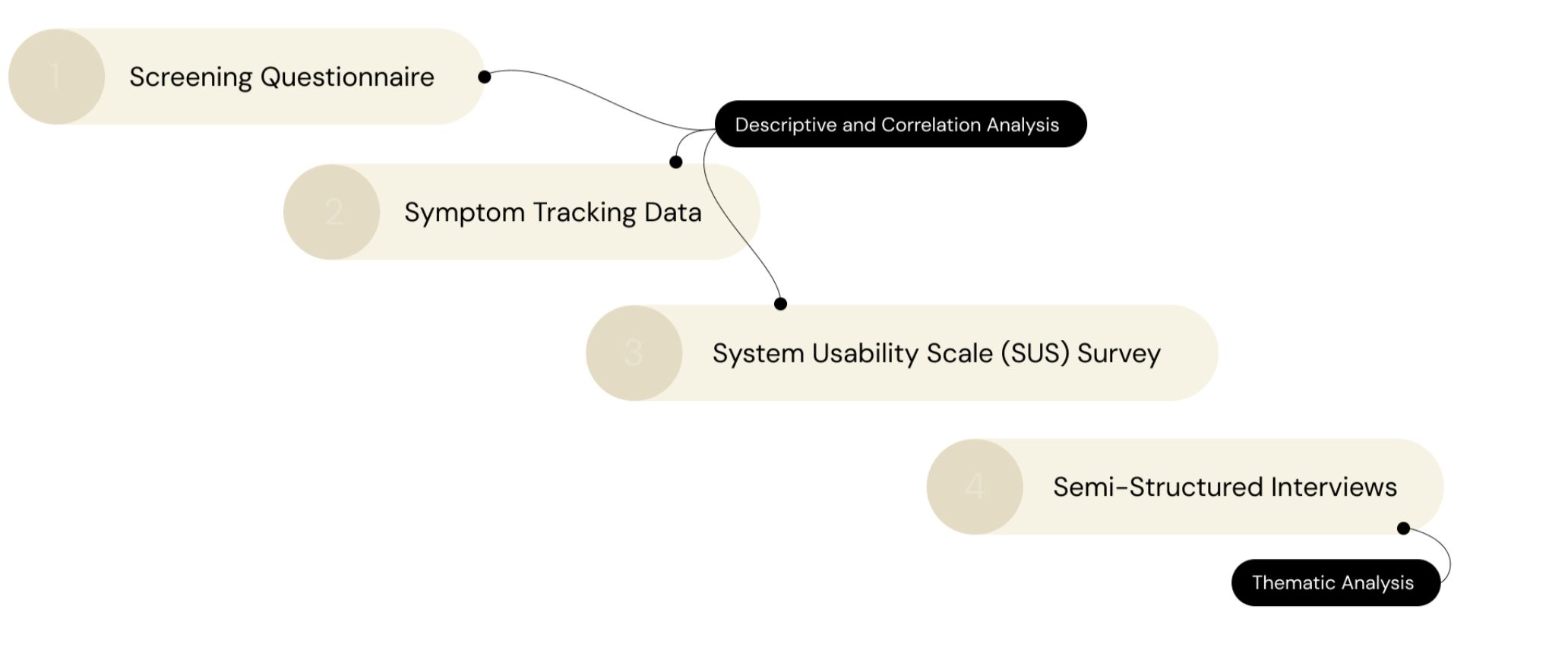
Mixed-methods, two-week diary study with 40 U.S. Clue users (perimenopausal or menopausal, joined perimenopause mode in past 3 months).
Data collection
- Daily symptom logs and reflective diary entries
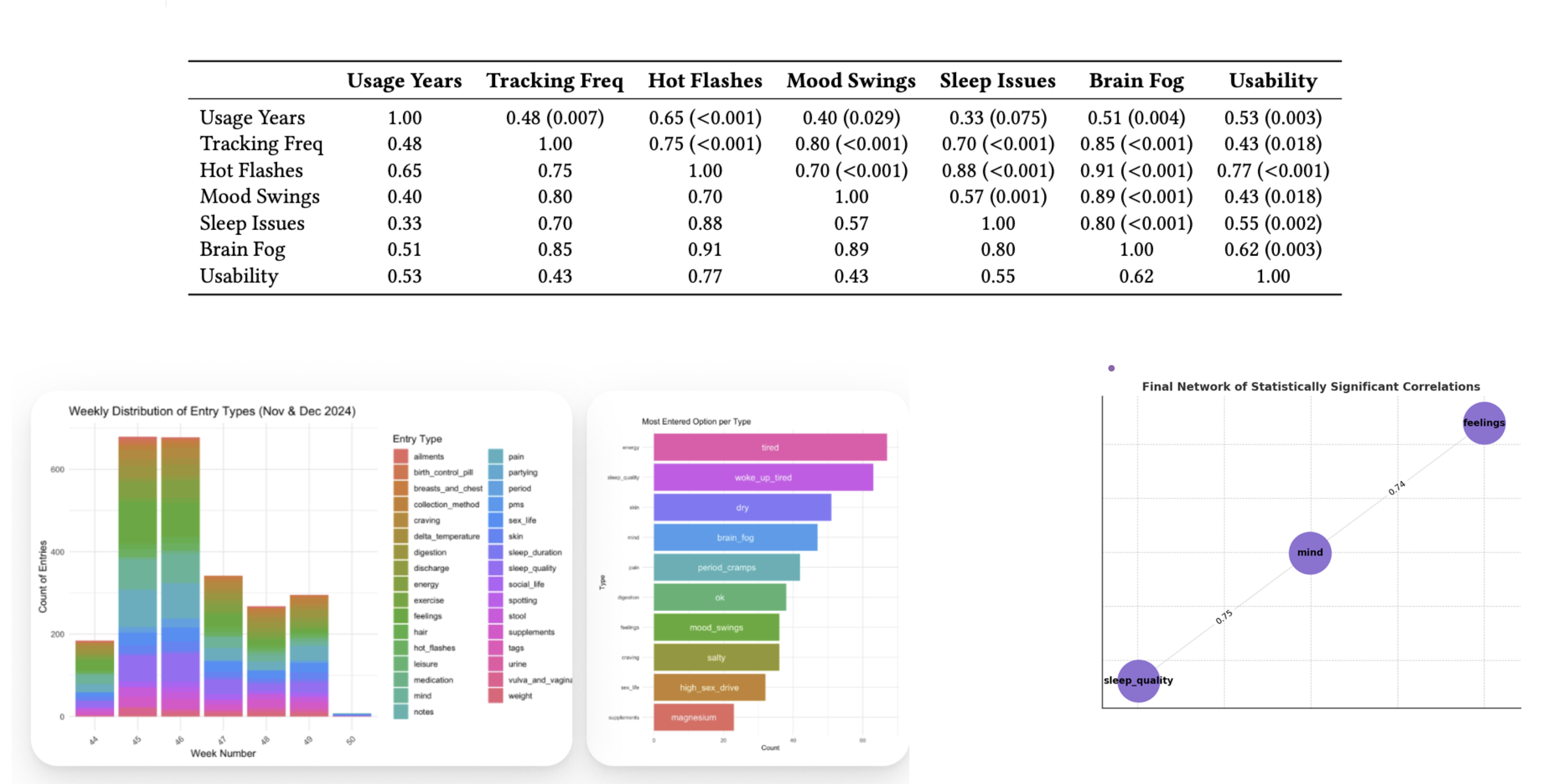
- App analytics (1,977 tracking events from 16 fully engaged participants)
- System Usability Scale (SUS) survey
- 30-minute semi-structured exit interviews
Analysis
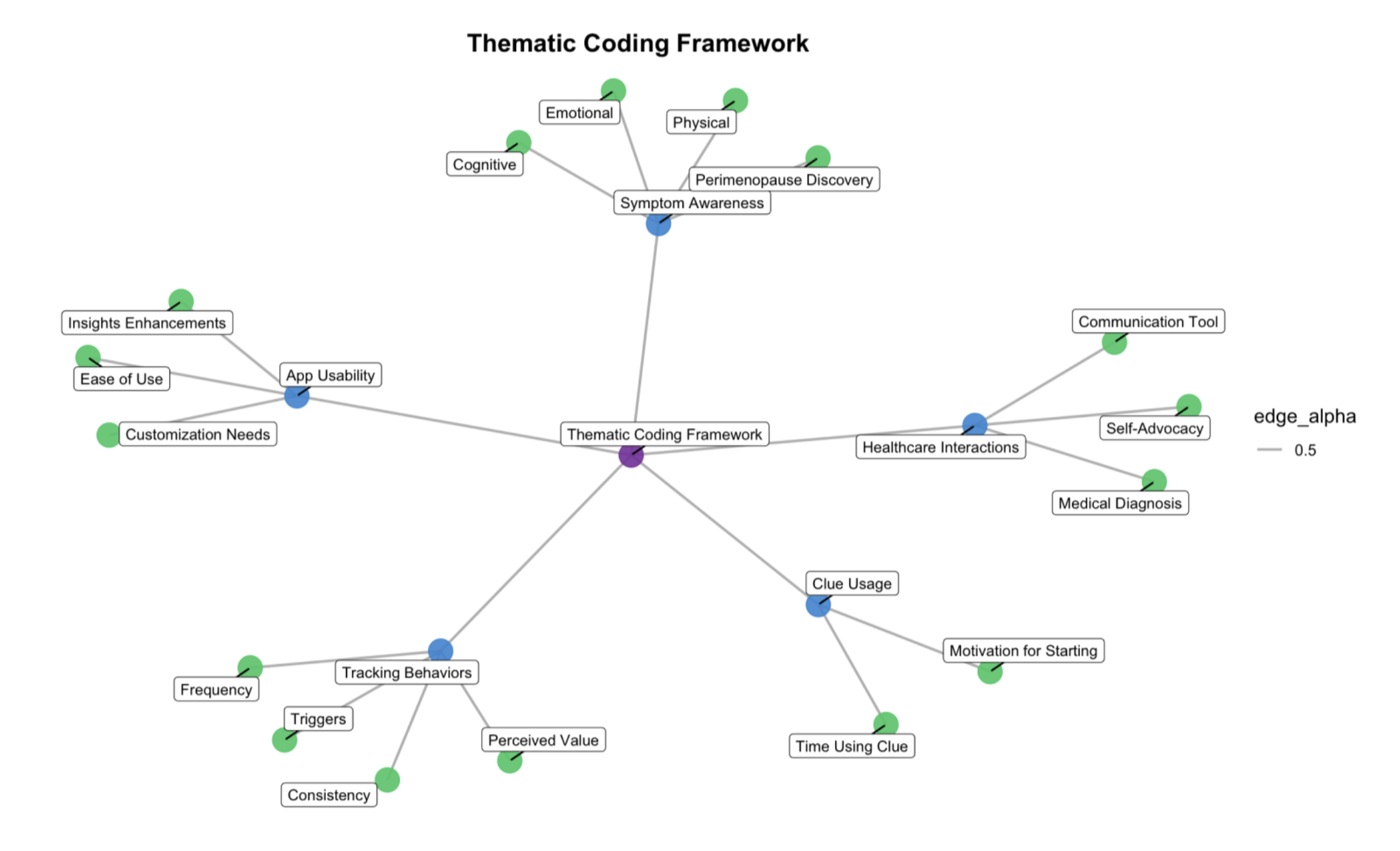
- Qualitative: Thematic analysis (Braun & Clarke) of diaries and interviews
- Quantitative: Descriptive statistics and correlation analyses (R) of tracking data and SUS scores
Ethics: IRB-approved, anonymous data, securely stored and destroyed post-study. Compensation: $50 Amazon gift card.
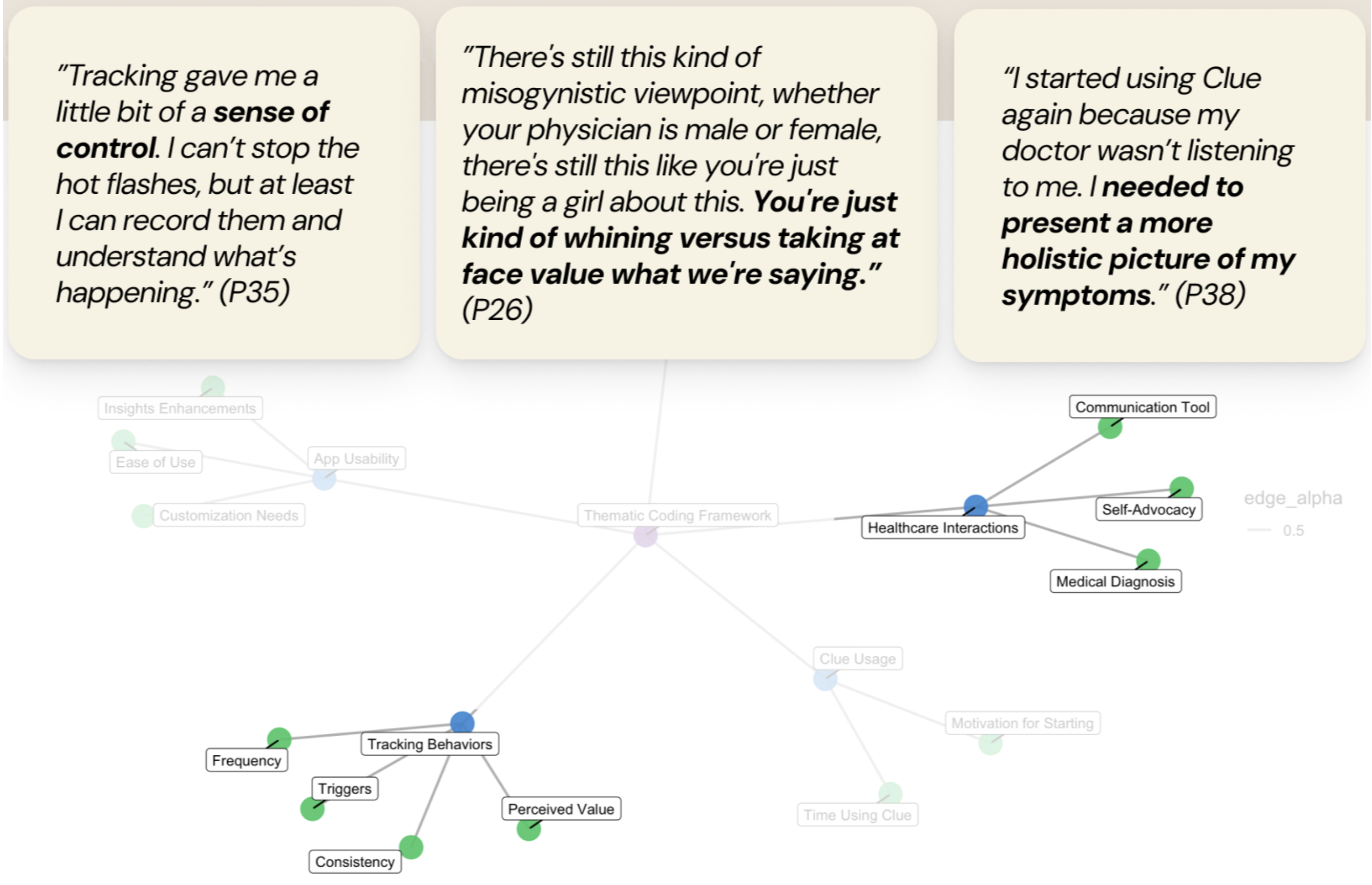
Tracking as validation and advocacy
Participants used logs as evidence in clinical visits. Tracking strengthened self-awareness and confidence, even when clinicians remained skeptical.
My doctor wasn't listening... I needed to present a more holistic picture.
P38, exit interview
Two distinct tracking styles
Daily Trackers: Consistent multi-category logging. Sporadic Trackers: Reactive logging during symptom spikes or before appointments.
Interconnected symptoms
Correlation analysis revealed strong links among hot flashes, brain fog, mood swings, and sleep disruption. These symptoms rarely occurred in isolation, suggesting the need for holistic views rather than siloed metrics.
High usability, shallow insights
Average SUS score of 88.3 (industry benchmark: 68). Users praised the interface but wanted customizable symptom categories, richer trend analysis, and integration with wearables.
Recommendations surfaced from the research, each grounded in a specific finding:
- Customizable tracking (from findings 1 and 4): Let users add or hide symptoms to reduce cognitive load.
- Correlation-aware trend views (from finding 3): Surface cross-symptom patterns instead of siloed metrics.
- Adaptive interfaces for two tracking styles (from finding 2): Recognize tracking style (daily vs. sporadic) and tailor prompts or dashboards.
The obvious move: Run a usability study of Clue's perimenopause mode: task success rates, error counts, satisfaction scores. That's what the app company expected and what most HCI dissertations deliver.
What I chose instead: A two-week diary study with mixed methods. The research question wasn't whether the interface was usable, it scored 88.3 SUS, well above benchmark. The question was whether symptom tracking actually changes how women understand and manage their experience. That's a lived-experience question, not a task-completion question.
The tradeoff: Diary studies produce messy, rich, hard-to-analyze data. Thematic analysis of 40 participants' reflective entries took significantly longer than coding usability sessions. But it surfaced findings, tracking as clinical advocacy, two distinct tracking styles, the gap between high usability and shallow insight, that a usability study would have missed entirely.
Demonstrated a repeatable way to evaluate products on experiential outcomes when usability metrics say everything is fine, and showed how tracking tools become evidence people use to advocate for themselves in clinical visits.
The study reinforced a principle I bring to every product: give people agency over what they track and surface insight, not just data.