Unified Patient Portal
Patients had no visibility into their own genetic tests — opaque billing, days of waiting, everything mediated through their physician. I used a federal compliance mandate as leverage to build something better: Natera’s first patient-facing product, now used by 181,000 patients to track tests, view results, and manage their care.
Used a federal compliance mandate as leverage to fund a purpose-built patient portal instead of bolting results onto the physician system
Natera’s genetic testing journey was built for clinicians. Patients — the people the results were actually about — had no way to see test status, understand their bill, or get results without waiting for a phone call. Then the 21st Century Cures Act mandated instant patient access to results, and the company had to respond.
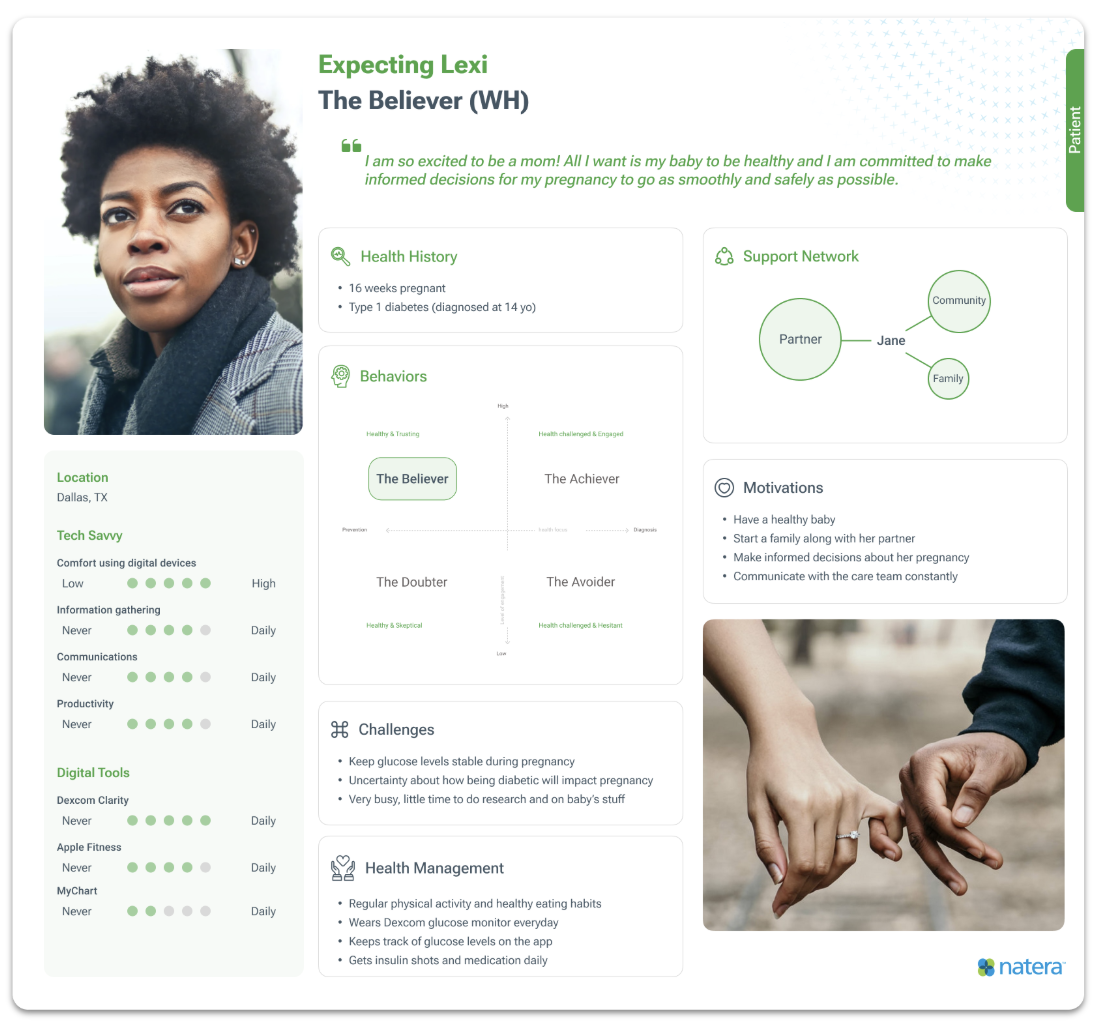
Patients are not clinicians, and I wasn't going to design for them from inside a conference room. I started with patient interviews and shadowing across both business units — sitting with patients as they navigated test ordering, waiting for results, and trying to understand their bills. I watched where confusion hit, where anxiety spiked, and where they gave up and called the clinic instead.
From there I ran workshops with 15 SMEs — genetic counselors, lab ops, product — to map the full journey from the system side and find where patient experience broke down. The combination of patient-facing and system-facing research is what surfaced the real design opportunities, not just the obvious ones.
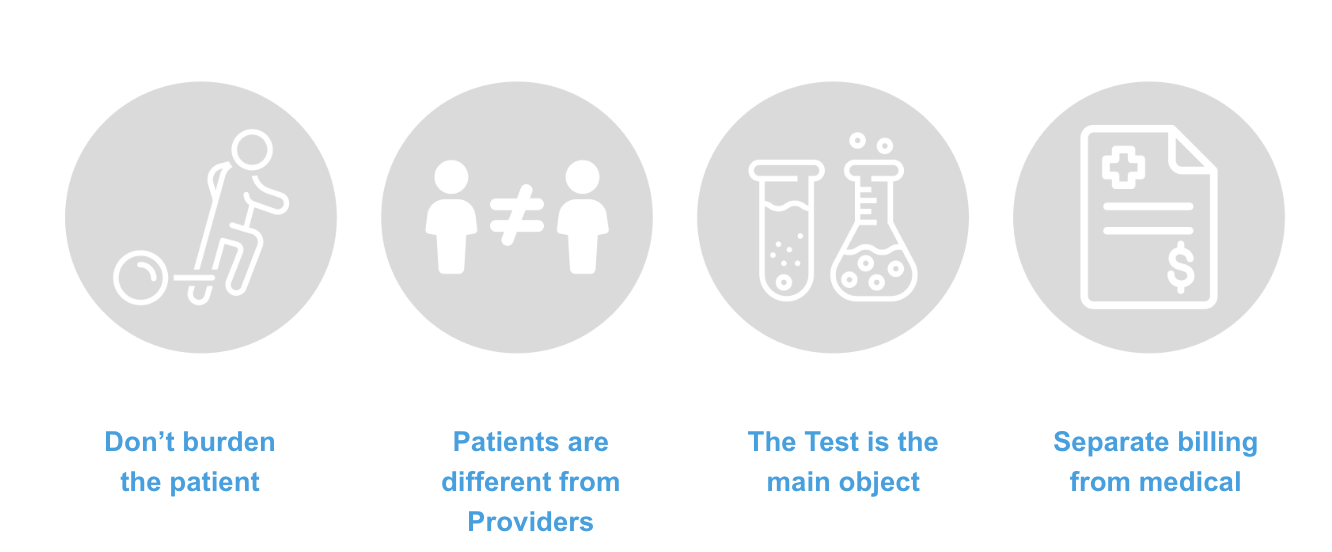
I led discovery across both business units — 15 SMEs spanning product, lab operations, and genetic counseling — and translated it into four principles that governed every downstream decision:
- Patients ≠ Providers — plain language, emotional sensitivity, no jargon
- Test is the core object — status and next action above everything else
- Separation of concerns — billing never sits next to medical results
- Do not burden — show only what the current moment requires
Anchoring the team to principles, rather than adjudicating features one by one, is what let a small cross-functional team move fast across two business units without me in every room.
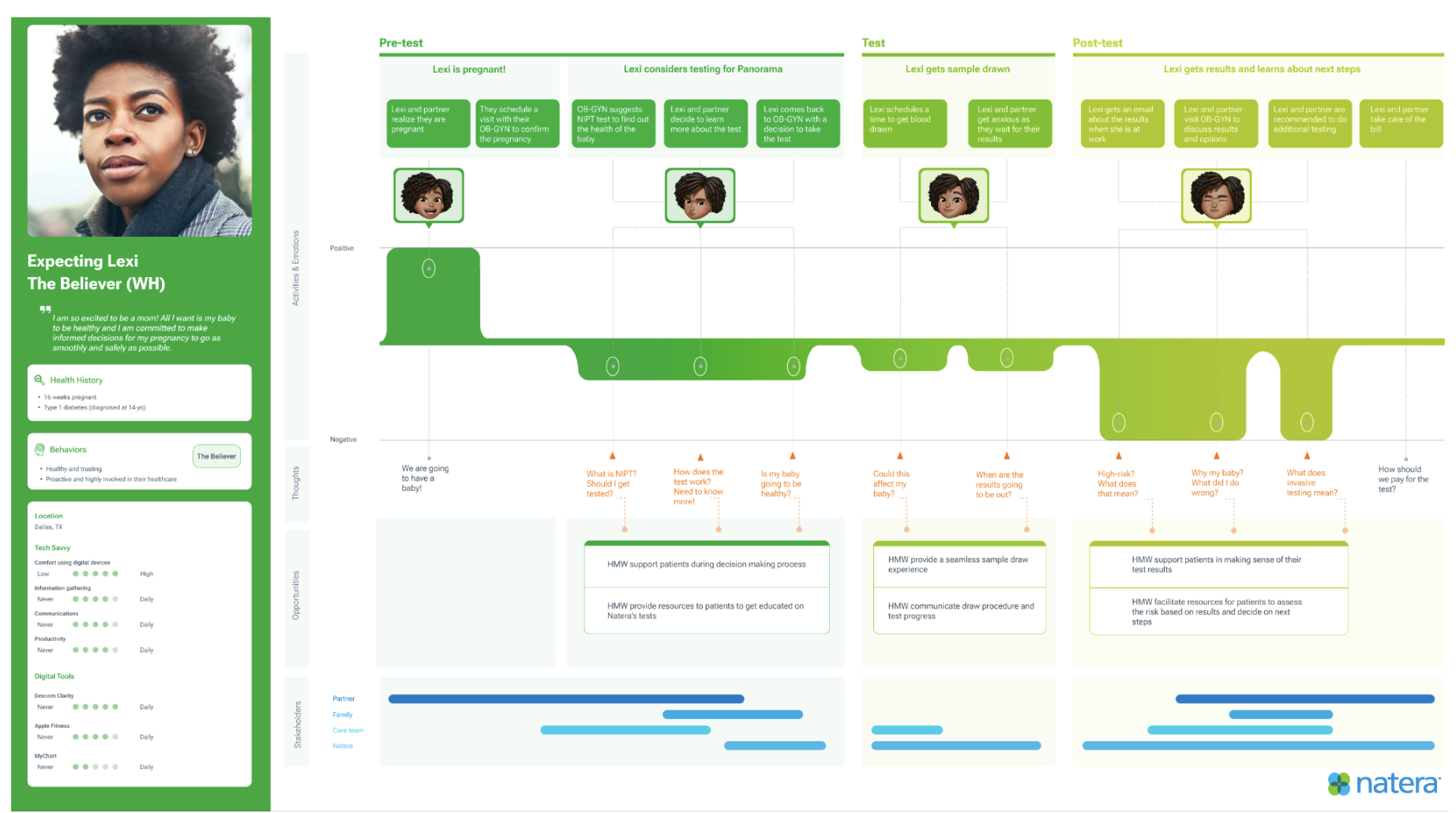
We designed around the moments that carry the most weight: scheduling a sample draw and opening results — with optional educational videos and a path to a genetic counselor built into the results experience. Usability testing with patients sharpened the flows across three major iterations, and pre-results education proved to do double duty: easing anxiety while improving comprehension.
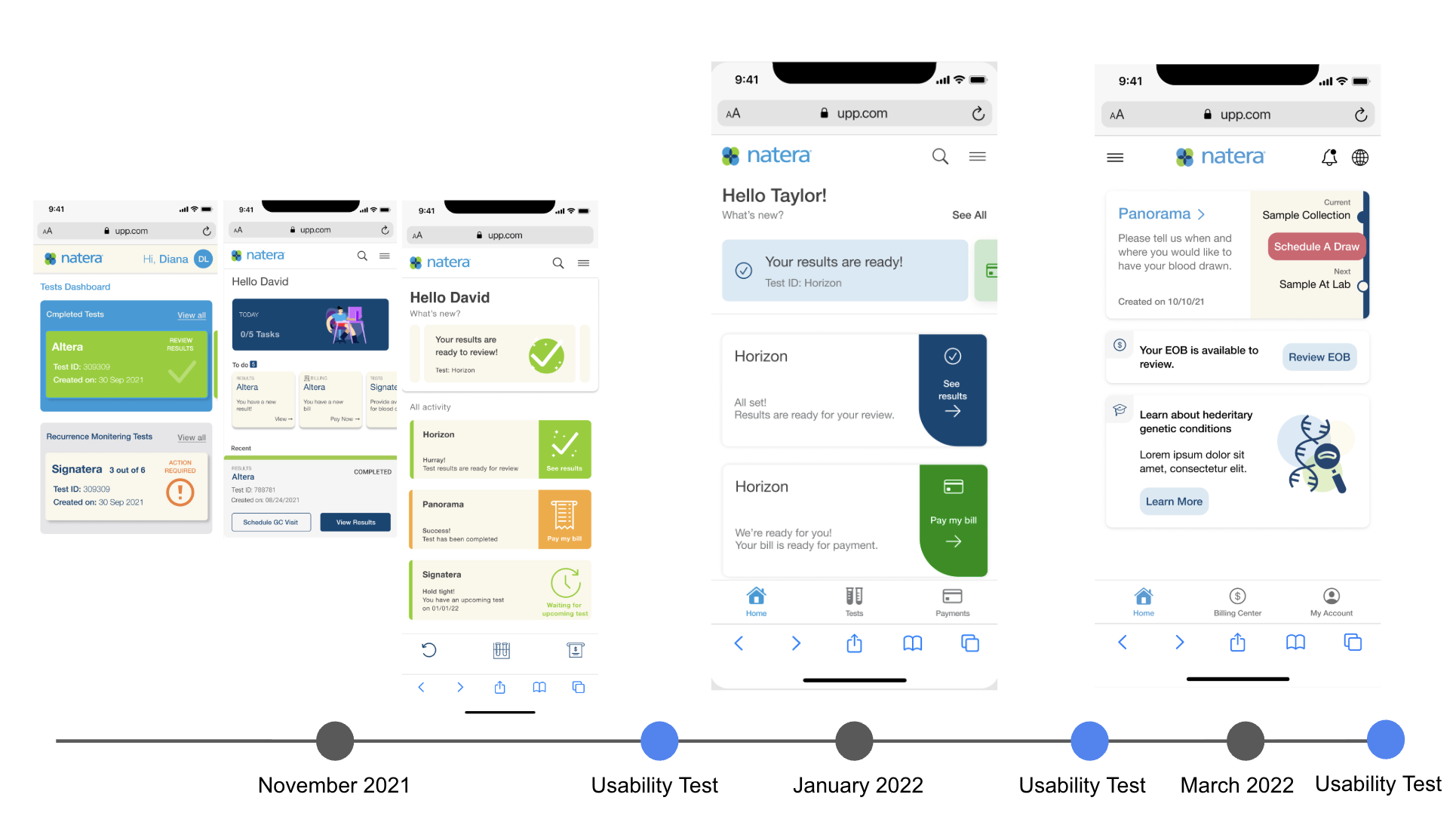
Six months post-launch: 181,000 patients had created accounts. Every Women’s Health patient who created an account returned to view results; over 90% of Organ Health patients did the same. Call-center load dropped as patients self-served, and the company met its Cures Act obligations — as a byproduct of good design rather than its ceiling.
Beyond the product: the portal became Natera’s first product surface to cross business unit boundaries, and its design principles became the foundation for all subsequent patient-facing work. The methodology was peer-reviewed and published at the Design Research Society 2024 conference — external validation that regulated companies can do patient-centered design without compromising compliance. Read the paper →
Compliance mandates are usually treated as taxes. This project taught me to treat them as budget — the regulatory trigger created a window to fund patient-centered work that would have otherwise waited years. The leadership job was recognizing the window and refusing to let the minimum viable interpretation define the outcome.
Expanding to oncology patients, improving scheduling adoption, and using longitudinal analytics to keep refining engagement.