Integrating AI into Design Practice
AI in Design Practice
Contextual inquiry across 3 clinical divisions generates 40+ hours of session recordings per quarter. Synthesis was the bottleneck — 2–3 weeks of manual transcription, affinity diagramming, and thematic coding before a single finding reached a product team. I built the framework for where AI enters that pipeline and where it doesn't.
Defined the operating model for AI adoption across five practice areas — production accelerates, judgment stays human
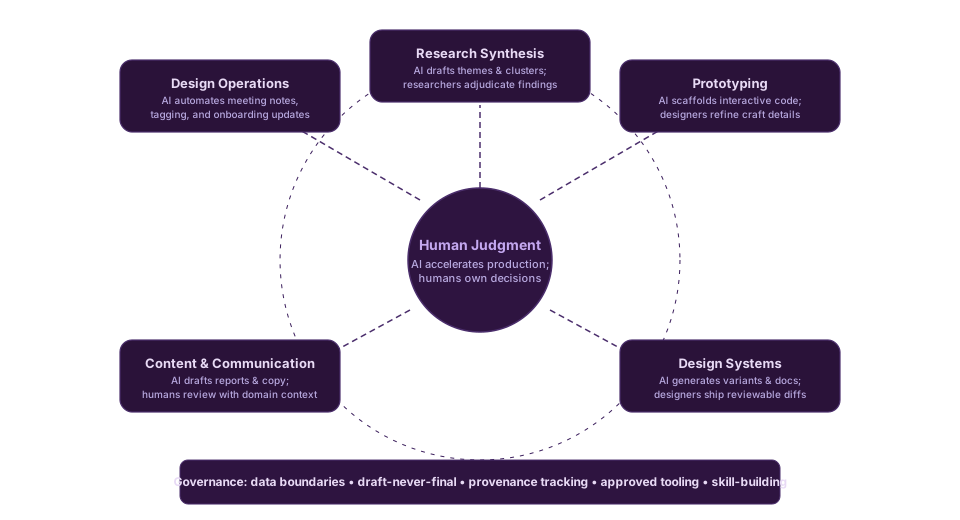
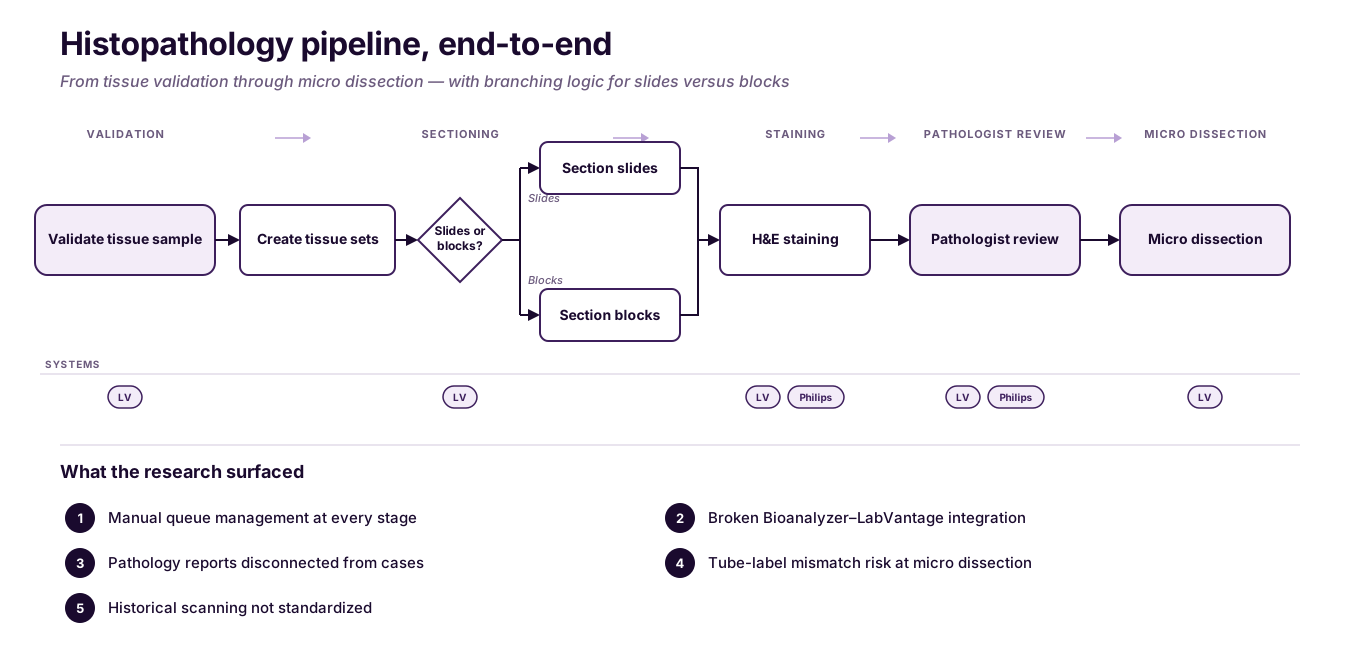
A 6-person design and research team covers clinical review, lab workflows, patient portal, and histopathology across Natera's pipeline. The constraint isn't talent — it's hours. AI changes the arithmetic on transcription, affinity clustering, prototype scaffolding, and documentation, but in a HIPAA-regulated environment processing PHI-adjacent data, every integration point needs explicit data boundaries.
Audited every repeating task across five practice areas — research, prototyping, design systems, content, ops — and classified each as production (volume-bound, pattern-matchable) or judgment (requires domain context, clinical accuracy, or design intent). The classification determines what AI touches and what it doesn't.
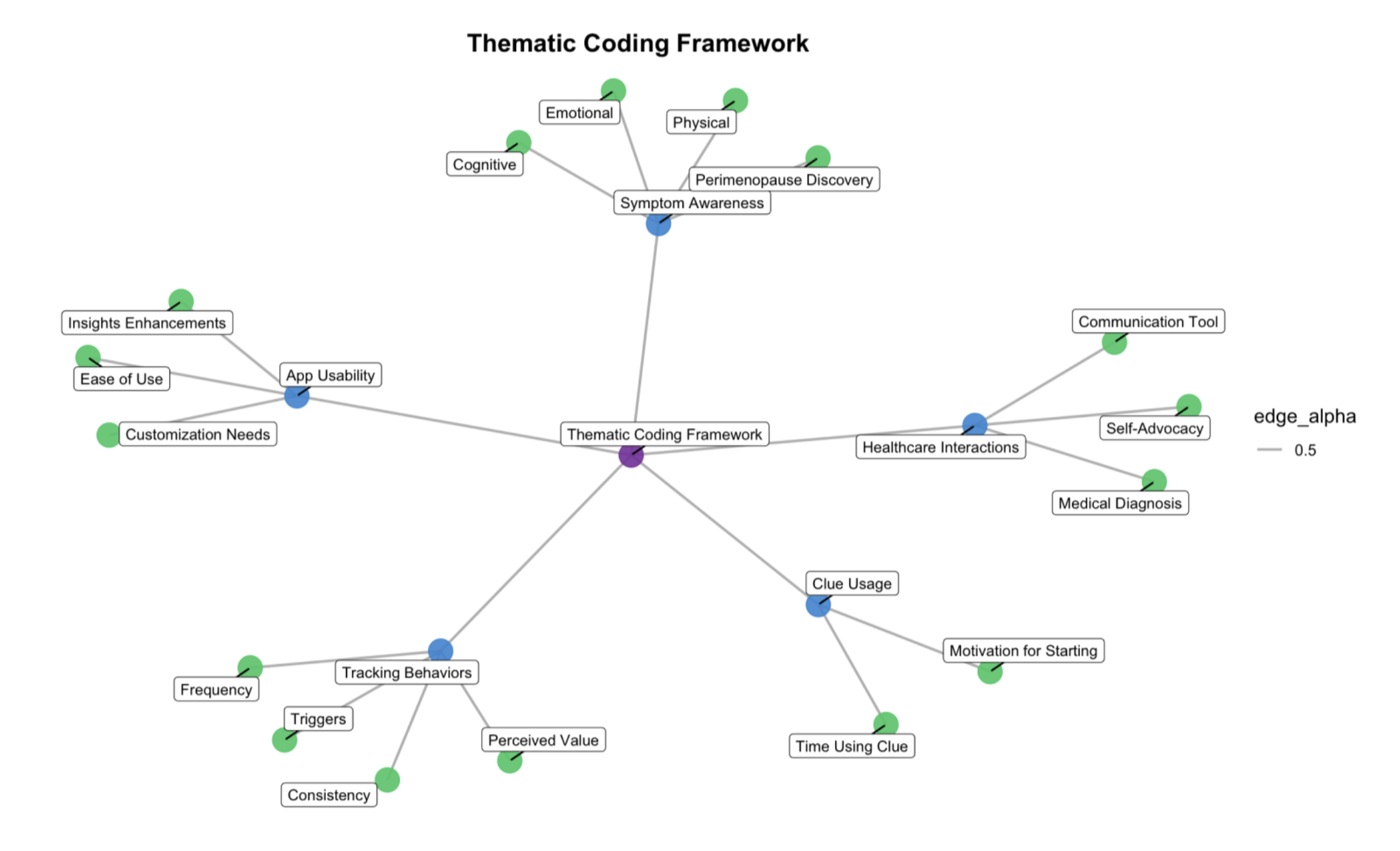
Before: a contextual inquiry study across 15 lab technicians produces ~20 hours of recordings and 80+ pages of field notes. Manual transcription, open coding in Dovetail, affinity diagramming in FigJam, thematic analysis writeup — 2–3 weeks before findings reach stakeholders. After: recordings run through compliant transcription (de-identified before any model sees them), Claude generates candidate affinity clusters and quote banks with source timestamps. The researcher validates clusters against their field memory, catches over-weighted themes, and traces every finding back to raw evidence. Synthesis-to-insight: 1–2 days. No AI-generated theme ships without a human researcher having verified the source trail.
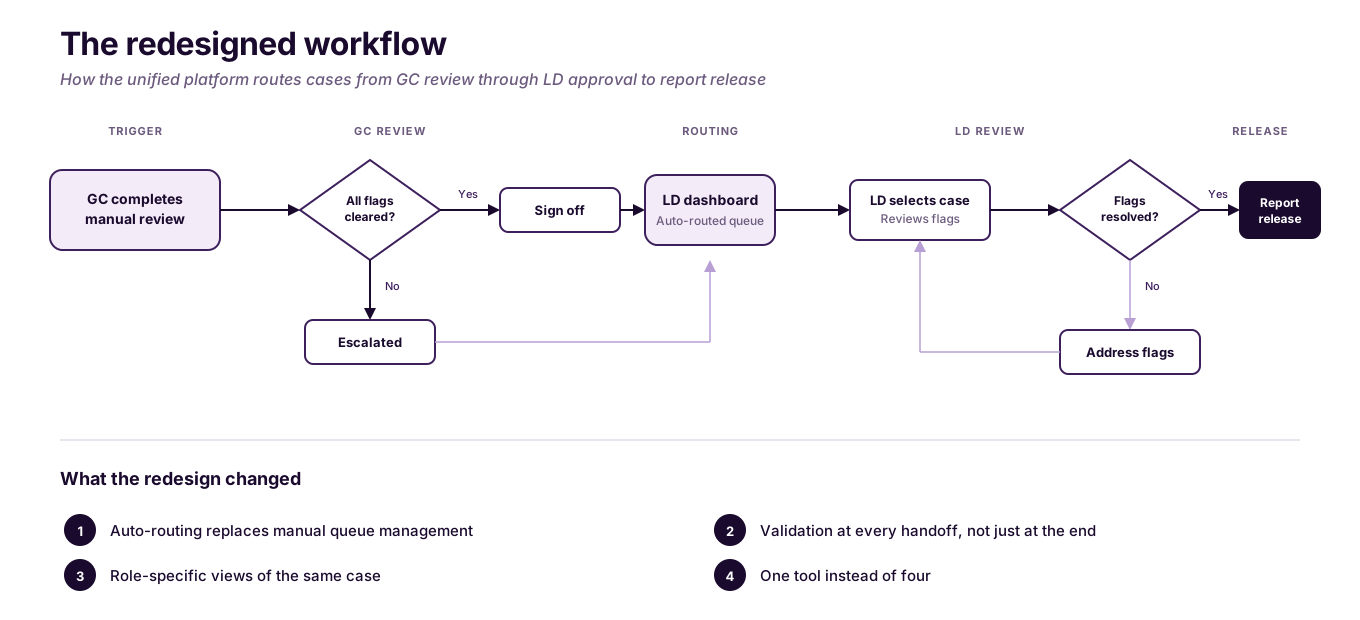
Clinical Review has 12 workflow states, 4 user roles (genetic counselor, lab director, clinical scientist, medical director), and conditional branching on variant pathogenicity classification. A Figma click-through can't represent that — it flattens the state machine into a linear happy path. AI-assisted prototyping (Claude Code building against our React component library) produces interactive builds with real branching logic, role-based views, and edge states. Usability testing on these prototypes catches issues — like the GC-to-lab-director escalation flow breaking on multi-gene panels — that flat mockups structurally cannot surface.
Downstream: AI generates button/input/table variants from design tokens, runs WCAG 2.1 AA contrast checks against our purple-on-dark palette, and drafts component API documentation that the system chronically lacked. Upstream: designers use AI to read the Vue.js production codebase — understanding how a LabVantage integration component actually handles barcode scan events before redesigning the scan-confirm flow. This eliminates "the design assumed something the code doesn't do" rework. Designers now ship spacing, token, and copy fixes as merge requests reviewed by engineering — AI makes the diffs small enough to be correct and reviewable without hand-holding.
Clinical-adjacent UX copy goes through human review with domain context: "heterozygous" vs. "carrier" vs. "one copy detected" each land differently for a genetic counselor versus a patient. AI generates 8–10 copy variants in seconds; the content designer selects and edits with clinical literacy the model doesn't have. Before design reviews, designers run structured prompts — Nielsen's heuristics against the current screen, WCAG audit, "what would a first-time lab tech misread here" — and arrive at critique with the surface issues already caught, so human review time focuses on workflow logic and domain accuracy.
Five rules across all practice areas
- Data boundaries are absolute — no PHI, patient identifiers, or lab sample data enters any AI tool; research recordings are de-identified through approved HIPAA-compliant transcription before processing
- AI output is always a draft — affinity clusters, code, copy, and documentation require sign-off by the accountable researcher or designer before leaving the team
- Provenance is tracked — research reports and design specs note which sections used AI-assisted drafting so review calibration is honest
- Tooling is centrally approved (Claude, GitHub Copilot, Whisper) with a lightweight RFC process for proposing additions
- Skill-building is deliberate — prompt engineering, model-limitation literacy, and AI-assisted prototyping are tracked team competencies with quarterly assessment
For a team designing clinical tools where a missed variant classification or a confusing patient result has downstream consequences, the framework converts AI speed into research depth and prototype fidelity — not into skipping steps. Synthesis that took 3 weeks now takes 2 days. Prototypes that were flat mockups now have real state machines. Small production fixes that died in sprint backlogs now ship as designer-authored MRs. The team size didn't change; the work it can do did.